Crude Oil Prices Refuse to Blink
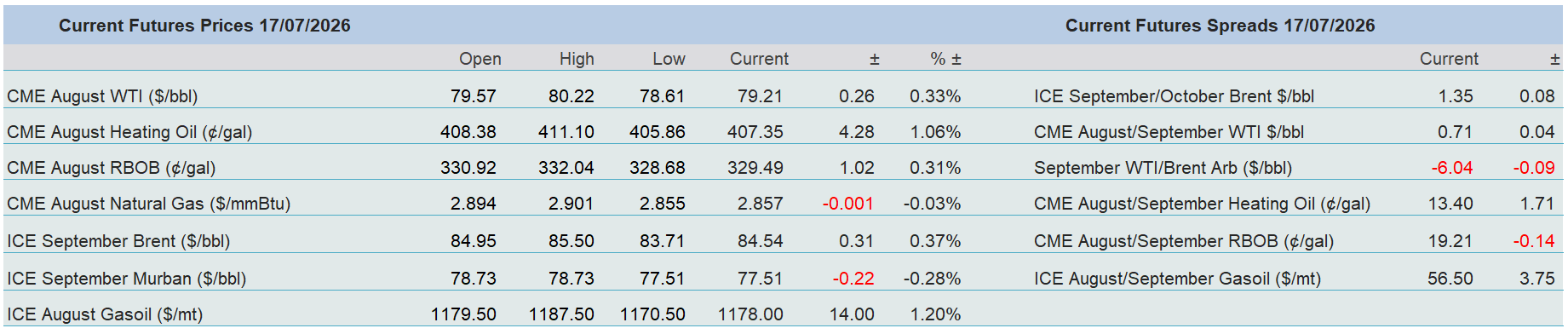
It must be said that there is a lack of urgency in oil circles at present. There have been some quite significant developments without which the experience of the last few months would have crude prices harrying triple digits. ‘Once bitten, twice shy’, as the old adage goes, and because oil supply has shown great resilience in finding its way to places that need it, and the ability for this conflict to be put back into a bottle at moment’s notice, what appears to be escalation, and the threat for more, is falling upon a stoic oil audience.
This is now day 6 of US strikes on Iran, and the repeated threat from the US President that Iran’s bridges might be targeted has now seen fruition. Additionally, the US Navy has redirected commercial vehicles and fired upon an unladen tanker, according to US Central Command, in accordance with its blockade of Iran. Further reports tell of US Marines boarding a vessel in the Gulf of Oman as an enforcement in its sea siege of possible Iranian assets.
Iran in turn has once again targeted neighbours with the US airbase in Jordan coming in for particular attention. However, it is readying its Houthi allies to once again attack shipping in the Red Sea if the US should make good on threats to hit its internal power infrastructure. Given that so much of Saudi Arabia’s exports have been redirected to the port of Yanbu via the East-West Pipeline to avoid Hormuz, any such development is a threat indeed. However, our market waits for fact rather than fiction these days, which is why crude prices have moved very little in the past few days.

It's not just about oil prices
The state of play in the current Middle Eastern war is a black hole influence on all and sundry of every market even when there is good news around. In fact, the good news of a cooling inflation situation within in the United States is very much to do with oil prices and their recent return, before the latest uptick, to the levels from which they initially rallied when the forces of the US and Israel first started their attacks upon Iran. The year-on-year inflation rate in May was at a three-year high of 4.2 percent but thanks to the memorandum of understanding, the June reading, published on Tuesday, was very much lower at 3.5 percent. The ongoing energy shock felt after the first few months of the conflict abated as a peace, of sorts, was ground out to the point of oil and gas being able to emerge from Hormuz, into the Gulf of Oman and the Arabian Sea beyond. This allowed for American Gasoline pump prices to retreat nearly 10 percent being not yet subject to any bite from the much-feared driving season.
Echoing the CPI, and a day later, there was the first decrease in US PPI for nearly a year. With a flat expectation, the downward reading of -0.3 percent month-on-month and the even more noteworthy cooling year-on-year reading in June of 5.5 percent against a call of 6.2 percent, has had the chattering classes, within investment tourism, creating conversation on how this might just help the US Federal Reserve box any ideas of increasing interest rates. Trading Economics reveal how a large part of the ‘factory gate’ price cooling is due to the cost for diesel fuel, jet fuel, crude, and thermoplastic resins fell. Those speculating on a reduced chance of an American rate hike were indeed rewarded by a downgrade in any imminent probability. Only a week ago, and using the CME FedWatch tool, there was a 25 percent chance of a raise in rates by 25-basis points in July, which has been trimmed to 10 percent, this is also seen in pricing for September, although there is an overall probability of a hike before the year is out.
However, the recent jawboning witnessed from Fed Board Members and indeed, that of the new Chair, Kevin Warsh, do not indicate a softening of hawkish tones. There is recognition of the recent runoff in price rises, but most have been at pains to point out that a single month of improved circumstances does not warrant a policy change. ‘Higher for longer’ has seeped into this bout of Fed thought processing, and their reticence will prove prescient given the soured nature of things in the Middle East and the sharp upturn in oil prices.
We have spoken of the dangers of assumption recently, and those who toyed with the idea that the memorandum of understanding would be a solve for the Iranian conflict are thinking again. There have been quite phenomenal corporate results posted this week, particularly from chip companies outside of the US. Europe’s biggest chip company ASML now expects revenue of between €43 billion and €45 billion in 2026, up from its previous forecast range of €36 billion to €40 billion. In Taiwan, TSMC year-on-year, second quarter revenue increased 36.0 percent with earnings per share (EPS) increasing by 77.4 percent. These are so astonishing that in times before there would be hand-over-fist buying in anything remotely A.I. or technology related.
Yet there is a reluctance once again emerging in stock markets, and although it would be disingenuous to say it is all because of the uncertainty in oil prices, every single relevant stock, commentary or words heard from talking heads on financial channels always lists the oil price as caveat to any predictions of further equity advances. Giving an oil perspective that seems relevant, Fatih Birol, the International Energy Agency Executive Director, said on Wednesday, "if the Strait of Hormuz remains closed, we may again have some difficulty for global economies” and suggested that fallout would begin in weeks, not months.
Every single part of the investment suite from fixed income, bonds, equities, Gold, cryptocurrency, commodities and of course forex and interest rates seem now dependent on how quickly this latest flare up in relations between the US and Iran is cooled. Failure to cure this self-inflicted blight will encourage risk to find safer shores and subsequent liquidity drains which are always bearish for financial instruments.
Overnight Pricing
17 Jul 2026
