An Eerie Equilibrium
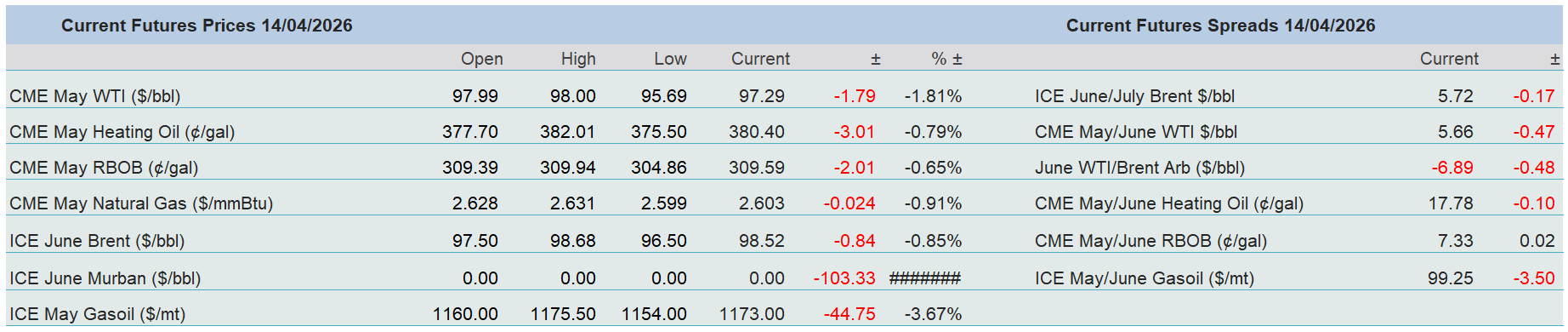
It has become a modern phenomenon, exampled in recent years by the wars in Ukraine, Gaza and now Iran, that markets after weeks and sometimes months of having nerves frayed, end up in entering a state of desensitisation. The wobbly US/Iranian ceasefire is allowing a certain amount of navel-gazing, and it turns out that any glance into unseemly depths is occluded by fluff. This is also brought about by a lack of trust in anything coming from either the US or Iran. Yesterday, the US President said thirty-four ships had traversed the Strait of Hormuz on Sunday, but what sort of vessels, size and cargo is omitted. With unconfirmed reports sourced from Islamabad telling of a continuance in backdoor negotiations and J.D. Vance talking on a possible meeting this this Thursday, these pieces of news are enough for oil bulls to back off and once again divert allegiance and trust to the stock market. There is also an inurement toward $3-$5/barrel moves in crude prices and as we have pointed out before at these levels reports of plus or minus days are shown in percentages, demeaning their relevance. Yesterday, there were a succession of talking heads making hay on how the S&P 500 had all but made back the lost ground since the start of this war and at $100/barrel for oil, inflation might just be tolerable. The Trump playbook is working at present, because the banners of flat price in oil markets are much more to do with the financial ins and outs and the correlative values against other assets. The world is being mollified, for the seriousness of the energy pinch point in the gulfs of Arabian seas is as every bit a threat to global economies as it was at the outset of the Israeli/US attack on Iran. What is not in the public eye are the backwardated state of oil price structures, the scramble for cargoes, the lack of tankers and ultimately how refiners will perform. Desensitised and sleepwalking indeed.

From Hungary with love
The war in and around Iran has just decided to dig itself in. The world should hardly be surprised bearing in mind the theocracy of Iran and the almost autocratic behaviour of a US President who is not shy in wielding the power of his executive. However, wandering back to another well-trodden conflict, the loss of office by the darling of the European right, Viktor Orban might just bring a concentration return to the Ukraine war. The former Prime Minister of Hungary had made no real secret of his loose alliance with Vladamir Putin, one built on mutual sycophancy that might have attracted greater intimacy with the US President if it were not for the will of the Hungarian people. J.D. Vance was dispatched to almost campaign for Fidesz, the party Orban leads and there have been plenty of media reports on how Moscow had been willing to aid Orban’s run for return with diversionary and unsettling dirty tricks. As my Hungarian colleague is quick to point out, “the fact that he lost despite endorsements from Trump and Putin screams for the phrase of ‘who needs enemies with friends like that?’”
It is, as always in these geopolitical climes, unwise to be certain on anything, but the change in the National Assembly of Hungary might bring about a more unified approach from the European Union toward Russia. In December 2025 the Union approved a €90 billion loan for Ukraine and while Hungary, along with Slovakia and Czechia negotiated their way out of contributing, the vote was nonetheless passed. However, in a volte face, Orban outraged his fellow Europeans by vetoing the loan in March before its implementation. With Russia’s war in Ukraine in its fifth year, Kyiv is facing a deficit that is almost out of control and with its appeals falling on deaf ears in Washington, the only source of financing is from the European Union.
The excuse of convenience used by Viktor Orban as he dashed Ukraine’s hopes, was the continued dispute over a war-damaged Druzhba pipeline. The damage to the flow came from a Russian attack in January, but Hungary has insisted that the line is all but repaired and it is a deliberate ploy by Ukraine to cut supplies to Hungary, which under Orban has sympathetic ties to Moscow. It does seem that the globe needs an evolutionary nudge everywhere and while Iran brings a stark reality in terms of reliance on fossil fuels, the relationship between Budapest and Moscow is built upon energy no matter what the political backslapping might suggest. Hungary’s oil and gas requirement is filled to tune of 80 percent by Russia still because of its exemption from Europe’s ban on energy imports from its oil and gas-rich Eastern neighbour. With his sixteen-year tenure as Prime Minister, Orban has cultivated Russian relations born out of its importance as a customer and has eventually even acted as a trusted interlocutor bridge between the Kremlin and the White House.
Peter Magyar is set to be Hungary’s new prime minister after his Tisza party swept into power and many expect a much-improved relationship with Brussels. Indeed, European Commission President Ursula von der Leyen, who would be wise to be more circumspect, but shows how much of an irritant Orban was, said, “Hungary has chosen Europe.” There is now an expectation that Hungary will withdraw its veto for the Ukrainian loan, but it must be noted that even such a vast amount of money may not be a key reversal in the illegal war initiated by Russia. According to Reuters calculations based on preliminary production data and oil prices, Russia's mineral extraction tax on oil output will increase in April to around 700 billion roubles ($9 billion) from 327 billion roubles in March. The revenue is up by some 10 percent from April last year. The current US sanctions waiver, allowing Russia to ply its oil exports across the waves, ran out over this weekend. The majority of commentators congregate around an opinion that this will be extended. Therein lies the rub. While Kyiv might enjoy the prospect of incoming monies from Europe due to the election result in Hungary, Moscow will enjoy a similar annualised boost from it being allowed to export oil in a much more lucrative price environment. Circular money funding dug in wars with oil being the common denominator. Dramatic irony that even Sophocles would be proud of.
Overnight Pricing
14 Apr 2026
