Eliminating the Impossible and Improbable Does Not Leave the Truth Sherlock
Yesterday, we delved into a longer-term view where we argued that the contango being shown in the further reaches of the Brent futures curve outlines a hereafter of increased demand, with the various aspects of why that might be the case. Our internal discussions gave realisation on how it seems that predicting forward oil prices is more likely to yield success than ploughing through the global landscape getting stuck in boggy geopolitical situations, or ones that are akin to massive rocks and able to blunt any blade of logical deduction. This poorly chosen farming analogy of course refers to the breakdown of the accepted post-war order of things since 1945, which, while not to be fully blamed on current global times, has certainly seen an acceleration in not knowing who one’s friend or foe might be.
The degradation of diplomatic ties between the Old Continent and the New World attracts fingers of blame from either side and is pointless. Europe needed a protector after the ravages of WWII, and the US needed a buffer to the expansions of the USSR. The side-effects being positive in how Europe’s military costs, besides those of the UK and France, were almost underwritten by Uncle Sam and the Americans in turn gained an empire by invitation, able to dictate economic, strategic and geopolitical interests. Whatever tolerance former administrations may have afforded Europe and or NATO, when politically drifting from Washington or not adhering to military spending minimums, will not be extended by the officers of Donald Trump. For two years running a senior American has been sent over to Eurobash. Last year’s clubber was Vice President J. D. Vance, this year it was Secretary of State Marco Rubio, who at least feigned diplomatic niceties, but the message was still the same. Europe is a decadent continent, heading for cultural suicide. If the corridors of Berlin, Paris, London et alia had any hope left as to whether the US was prepared to continue as the continent’s security blanket, it appears dashed.
So much for the ‘back of a beer mat’ history, what does it mean for oil prices? Exactly, what does it mean? Uncertainty to the factor of unknown is what. It is extraordinary that having now borne the financial majority of rearming Ukraine, Europe is not offered a place at the table when the US, Russia and Ukraine have their never-ending meetings. To have one would give at least a cursory sense of control in what the outcome might be. The US has drifted so far in outlook and seems intent on appeasing Russia at every corner that Europe must look to its own devices for self-defence. The €500 billion Germany is about to spend on stimulus, with €108 billion and 10k soldiers as a military addition, means a European arms race has already started. If the US keeps insisting on Europe getting its own house in order, the German call to arms will spread in attitude to its neighbours with a continent-wide historical reversion in being armed to the teeth.
The following-on perceived anxiety must be another prop to oil prices. It is de rigueur in modern times to go hunting for mineral wealth in the name of national security. What does that look like in Europe other than a time warp back to the 1930s and 40s? The inevitable inflation that will come with increased continental spending is a multi-consideration in itself. Do oil prices rally on industrial demand as a war footing takes hold or do they whimper away because inflation will keep consumer spending firmly at home? It is more likely oil prices will align with historical instances of inflation and rise alongside it. The tangibility card will be most definitely played and as currencies devalue more monies pile into oil positioning which will be exponentially increased if flash points bring harm to energy supply. This is of course whimsy, but we live in a world of caprice and they both fuel underlying anxiety and we are now corralled, with some justification, into believing anything can happen so everything, no matter how preposterous, must be considered.
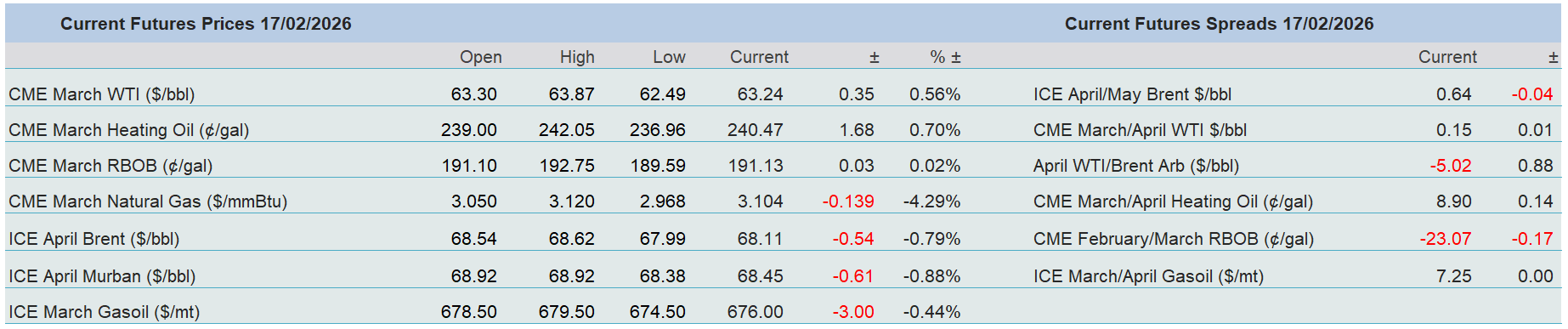
The Islamic Revolutionary Guard Corps yesterday chose an inopportune moment to conduct naval exercises in the Strait of Hormuz. Would it be considered warmongering to suggest the IRGC would not act so provocatively if Tehran did not suspect the US military machine is coming no matter what appeasement is mouthed in Geneva today? Sending one carrier group to the Middle East might be considered a diplomatic feint, sending another, and the cost involved in playing warship chess, is surely overkill to make the US’s point. Last week Benjamin Netanyahu rushed to Washington after a dialling down of language appeared as if the US was about to make Iranian talks solely a nuclear negotiation. This is an anathema to the Israeli Prime Minister whose ultimate aim is rid the Middle East of Iran’s malice. The US President listens to Bibi. The question remains, in the run-up to the US midterm elections, will the US President roll his aircraft carrier dice and risk $100/barrel crude oil as Americans consider keeping Trump’s majority in government intact? Brent futures trading nigh $70/barrel, in the face of many and varied predictions of oversupply this year, is hedging against such a possibility.
Herein lies the rub, our collective has more chance of taking up supply/demand strategies for the end of this year and into 2027 than now. There is societal critique making the rounds on how our attention needs instant gratification, it seems the politics of the day reflects this. Five, ten or twenty-year plans or budgets are the remit of China, everywhere else; economic frailty, civilian unrest or diplomatic breakdown comes with an almost next day stimulus, deployment of law enforcement or war. This is fertile ground for someone like the US President, who in the madness of his own making doles out edicts, threats and wisdom as some latter-day Solomon. A Wall Street Journal opinion piece captures the essence of our point today on how the phenomenon in which the world and, more focally oil prices, are at political mercy. The Journal describes Trump as being the sole arbiter in the fate of Iran and how it “is crucial to its region and to world oil markets, […] the more the talking heads speculate about his intentions, the more intently financial market participants and global policymakers struggle to discern his intentions.” We hang on his every word; the US President has got us all just where he wants us, intentionally or not.
Overnight Pricing
17 Feb 2026
