It is All About Venezuela
What do Russia and Venezuela have in common? They are allies, and both sit on enviable oil wealth (the latter much more so than the former). What are the major differences between Russia and Venezuela? They are on different continents; the latter lies within the US sphere of influence and does not possess nuclear weapons. These differences probably sum up the contrasting treatment of the two autocratic countries by the United States.
Russia enjoys the tacit support of President Trump in its war against Ukraine, and its leader has won the admiration of the US President. The Venezuelan strongman, by contrast, was kidnapped by US special forces without Congressional or UN authorisation, and the US volunteered—well, announced—to control the country until a “safe, proper, and judicious transition.” Donald Trump has envisaged US oil majors running the country’s oil riches.
This is a baffling, norm-breaking (or is 21st-century colonisation becoming the new norm?), and likely illegal adventure, plausibly carried out with impunity. Yet the market reaction was inconsistent. Shares of US oil majors and service companies jumped, implying expectations of an increase in the country’s oil production, at least in the medium term. Such a conclusion may prove premature, as it is far from clear whether a possible regime change would provide a sound basis for reviving the country’s oil industry or whether US companies have the appetite and capital to invest in Venezuela.
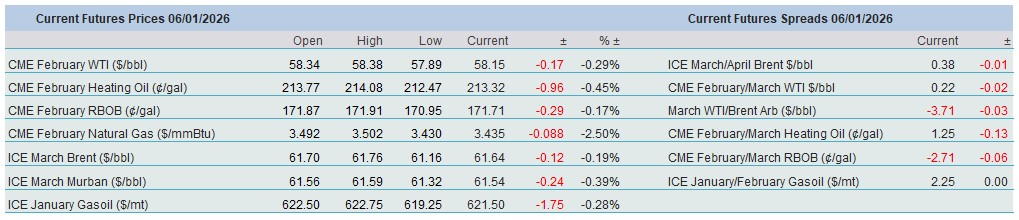
Oil traders, on the other hand, seemed less optimistic about Venezuela’s prospects. After an initial dip, prices finished the day $1 per barrel higher, although the country’s oil exports have resumed after a 4-day pause. At this stage, there are only questions with no immediate answers. Who will run the country in the future? Will the US shamelessly exploit its current position and monetise Venezuela’s natural resources for its own benefit using whatever subterfuge seems acceptable? How will domestic militant and criminal groups react? More importantly, what will Russia and China say about this return to an era when colonisation and exploitation were accepted as standard practice?

L’État, c’est moi!
Admittedly, singling out the peace prize offered to the US President by the International Football Association and the US administration’s new National Security Strategy (NSS) might be viewed as far-fetched choices for grasping the idiosyncrasies of the policymaking of the world’s strongest military and economic power, but they conspicuously and faithfully encapsulate what President Trump and his government are attempting to achieve personally, domestically, and globally.
Donald Trump’s personal ambition to be universally recognised and loved knows no boundaries. His desire to be awarded the most coveted prize, the Nobel Peace Prize, is well-advertised—by him. Rules and customs are largely irrelevant. Irrespective of the fact that nominations are based on the previous year’s events (in this case, 2024), his omission from the list of contenders clearly outraged him. Something had to be done to rectify the injustice, and the second-best option was the inaugural FIFA Peace Prize, which was presented to him during the 2026 World Cup draw last month. It mattered little that the selection process was anything but transparent; the fact that he was recognised by a sporting federation for “his exceptional and extraordinary actions for peace and for uniting people across the world” clearly devalued and belittled the Nobel Peace Prize.
Whilst this recognition seemingly has nothing to do with global politics, the economy, or the oil balance, it lays bare one important characteristic of the president. Call it vanity, ego, or an inferiority complex, but flattery works with him. Charm him, preferably publicly, and the odds of achieving your goal or mitigating his wrath improve exponentially. Headlines are more important to him than substance. A good example of this approach can be found in the US–EU trade agreement, under which Europe promised to buy US energy products worth $750 billion over three years. Yet its purchases of US oil and gas amounted to just $29.6 billion in the last four months, the FT points out, which would equate to roughly a third of the nameplate value committed to in the trade deal. Once the framework agreement was struck, reinforcing it became irrelevant. This is what happens when a democratically elected leader runs the country with no checks or control.
If the FIFA award is labelled surreal and Trumpesque, the publication of the US National Security Strategy 2025 is even more so. The administration’s vision for the US, and for the world at large, is quite ominous, as a rules-based order is replaced by the principle of “might makes right”. The tenet on which the document rests is the 1823 Monroe Doctrine, which established the Western Hemisphere as the US sphere of influence. Of course, much has changed over the past 240 years, and in the first half of the 19th century, global challenges such as climate change, pandemics, or artificial intelligence, issues requiring global cooperation, did not exist. It is precisely these changes that make the intransigent strategic priorities more than frightening.
The shift to an America First strategy represents an explicit break from collaboration with allies. It prioritises immigration control, reindustrialisation, and critical supply-chain, technological, military, and energy dominance. It identifies China as the main competitor, places less emphasis on the Middle East, and willingly concedes soft power in Africa. The document devotes a standalone section to Europe, delivering fierce criticism of migration and political trends, and openly supporting far-right parties on the Old Continent, while questioning the usefulness of common markets such as the EU. This condemnation is hardly surprising given the US's ambition to become the world’s dominant economic power.
In light of the principles outlined in NSS 2025, the weekend’s possibly illegal attack on Venezuela and the removal of its leader are being put into context. By reiterating that the Western Hemisphere is meant to be the US sphere of influence and underscoring its determination to become a dominant energy power, the move sends shivers down the spines of the leaders of Cuba, Colombia, Mexico, Canada, and even Denmark, which governs the natural resource–rich Greenland.
The intervention, which lacked the approval of the US Congress, opens Pandora’s box and may have far-reaching global consequences. One need only consider China’s watchful eye on Taiwan or Russia’s renewed efforts to assert dominance in Eastern Europe. History also suggests that the record of American regime-change attempts is far from impeccable. Haiti, Iraq, Libya, and Afghanistan come to mind. Whether a new Venezuelan regime, if one emerges, would be willing to hand over its natural resources to the US is doubtful, not to mention the competing interests of civilian militias, criminal networks, and several other armed groups, including Colombian guerrillas, all of whom supported the Maduro regime. The New Year has begun in a disturbingly shaky fashion, and more of the same can be expected in the months ahead.
Overnight Pricing
07 Jan 2026
