A Memorandum of War
Markets are looking down the barrel of another period in time of competing headlines which will be fuelled by the turnarounds from one Donald J. Trump. Fortunately, the US President has been talked down from slapping a 20 percent fee on ships aided by the US in negotiating a Hormuz crossing, but his mouthing of trade deals and investments in kind, brings a whole new level of confusion to the miasma created in tariffs and sanctions by this White House. We discuss below why Trump seems intent on accelerating warcraft, but today it is hard to ignore his threats of infrastructure bombing being that of energy plants and bridges next week, and an interview aired last night, in which he said, "I'll save the energy targets for last, but ultimately we'll hit energy targets." This warning cannot be idly let by from oil practitioners, because at the current rate of expansion of this current bout in the war, such a world changing move seems at least worthy of consideration even if it runs counter to any feasibility that this conflict might remain contained.

The ballot and the bomb
No matter the reasons for entering a war, be they of noble cause or a descending thereafter ladder of justification, the domestic politics of countries involved take on an added spice to the political pot and indeed often overwhelm the whole stew. Such is the case in this jarringly unnecessary conflict between the United States and Iran.
Many commentators surround the idea that the US President has for the last few months displayed an almost zealous willing to steer this war onto an off ramp that is not only palatable to the American public, but to those in economic circles that insist on free-flowing oil and energy which safeguards growth. The presidential motivation is quite clear; it is the forthcoming US mid-term elections. These halfway house measures of success for US Administrations determine whether the incumbent President will have a free ride in his legislative timetable through to the end of his four-year tenure. At present, and without repeating the mistake of believing polls, Donald Trump, is very much in danger of losing political control. The House of Representatives in its entirety and 35 of the 100 seats in the Senate will be contested in November. At present, Republicans control both the House and the Senate, and while this current President is not bashful in exercising executive privilege, a Democrat majority will be much more willing to face up to the White House and contest, with oversight, not only domestic plans but that of foreign policy too.
Until now, Trump’s vociferous campaign that oil will still flow even though the war was far from settled has been furthered and supported by the ingenious way in which oil always finds a way to reach points of demand. This has appeased the worry over higher energy prices and the attached inflation it presages. Yet the time bought by SPR releases and increased US production is being eroded along with the patience of Trump himself. The Iranian regime is very much aware of the political vulnerability their foe now faces and the longer they can haggle their way closer to the US elections, the greater Tehran believes its leverage will be. This delaying tactic is working; it has caused the US to lash out again and by doing so compromised any notion that oil is flowing freely through the pinch of Hormuz.
The bizarre floating of an idea by Trump that the US will charge a 20 percent cargo value, since changed to "trade and investment deals", on any vessel it aids through the channel of water between Oman and Iran is as frightening as it is illegal. One wonders what the difference is between Iran insisting on a toll for safe passage or the US levying whatever form of tax for the same purpose. This ridiculous development reveals how Washington is feeling the hands of time tick away from it. The slow-paced negotiations aimed at a soft landing for oil prices might now be taken over by the need to show the electorate before November that the US is not in a new ‘forever war’.
The political situation in Iran has changed by the inability of the US to bring the fundamentalist regime of Tehran to heel. Preceding and at the beginning of the war, Iranian protests were brutally put down in a murderous campaign to rout dissention against the regime of hardline clerics. Portrayals of martyrdom, particularly in the recent funeral of Supreme Leader Ali Khamenei, and of being the underdog and victim to “Zionist oppression” has muted opposition and galvanised nationalism. The Wall Street Journal observes how hard-line lawmakers, broadcasters and other vocal factions are leveraging those emotions to box in Tehran’s negotiators and limit their capacity to cut deals with the US.
Is the recent acceleration in military clashes just a flurry of reminders to get on with negotiation or something more? It is difficult to know. Our discussions here corroborated with the idea on an acceleration of US aggression after the mid-term elections for fear of vote busting, higher Gasoline prices. Maybe circumstance has caused a changed in US strategy. It is intriguing to contemplate on how the White House perceives which is the greater threat to electoral success in November. Higher Gasoline prices and with it, inflation, or being stuck in a war with no end that continues to suck on the resources of the US taxpayer. Indeed, it might be some other consideration made dark to us because we really do not know what is going on in Hormuz with Americans playing every bit of a privateer role as are the Iranians in wanting to illegally impose fees in internationals waters. Or the worst fear of all, and one that we all suspect, that this war is being made up as it goes along, and political considerations are gathered collateral.
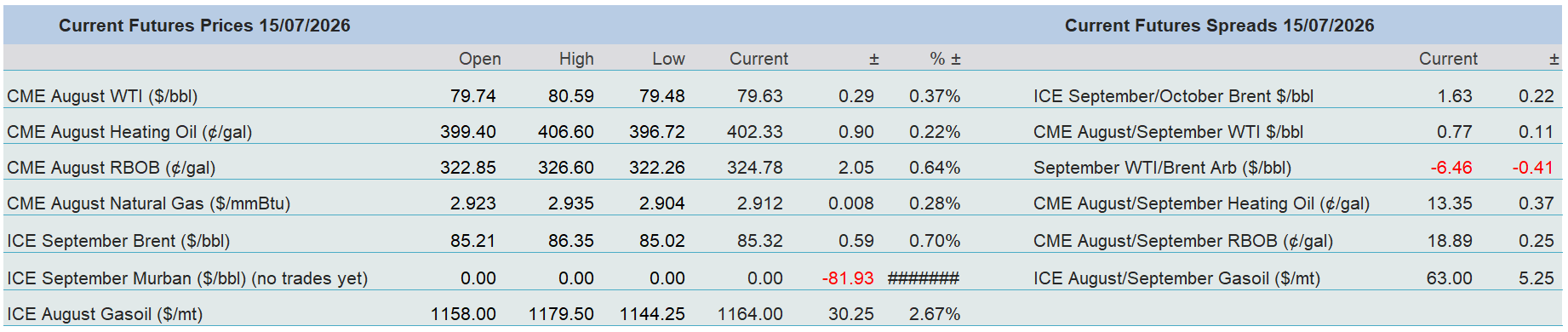
Overnight Pricing
15 Jul 2026
