Project Deadlock
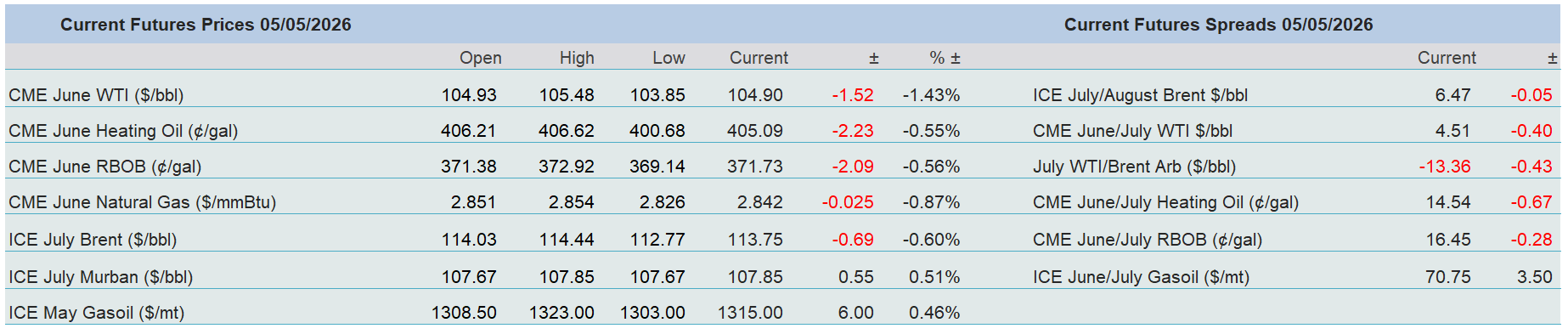
Under the auspice of ‘Project Freedom’ a couple of ships have made good on crossing the Strait of Hormuz, guided it is reported by US naval assets. Yet, other reports come in, and from reliable sources such as the UKMTO that a tanker in the strait and a bulk carrier north of Dubai have been hit by small aircrafts. Further south at the UAE’s oil and gas hub of Fujairah, a refinery has been set ablaze after a swathe of Iranian drones were fired at the Emirate. There are unverified reports on social media of explosions at Iranian ports, and even if not true, there is enough evidence to suggest that this quagmire not only continues, but these increasing incidents of warfare pour ridicule on any notion on how any agreement between the antagonists might materialise. The soundbite of the day, as seen on Reuters, comes from Iran’s Foreign Minister, Abbas Araqchi who wrote, “Project Freedom is Project Deadlock.”
The US President has deployed semantics in avoiding facing the ‘War Powers Resolution of 1973, in which the president must terminate its military campaign at the end of the 60-day window, unless Congress has declared war or authorized the use of military force’, by stating there has not been any direct hostilities for more than three weeks, and that the ‘clock’ on the 60-day limit had been paused because of the ceasefire. When a far-off resolution to any problem occurs in all walks of life, ‘time’ is bought and sought, and this surely feels as if this is an example of a flounder. Headlines will come aplenty, and prices will keep taking a step back from time to time, but with no end in sight in this saga of sadness and madness, there will always be two steps taking prices forward.

Old habits die hard
The concept of demand destruction is touted as a thing coming very soon to a place near you in the very near future. However, ‘destruction’, has already arrived and served up in the receptacle that is the airline industry.
The International Air Transport Association provides a Jet Fuel Price Monitor showing the latest price data from the leading energy information provider Platts. The Jet Fuel Price Index and price data show the average prices paid at the refinery for aviation jet fuel. Looking at prices since April 2024, the regions of Asia and Oceania, Europe and CIS, Middle East, North America, Latin America and Caribbean and Africa have largely been unmoved from $100/barrel. That is of course until the outbreak of hostilities in the Middle East in February of this year and although off the highs, peaked at the start of this month from circa $180/barrel in North America and circa $225 in Asia and Oceania. The IATA’s index of average global jet fuel prices then shows a peak of $210/barrel. It is hardly surprising that airlines in the East are paying way much more than their North American counterparts because if reflects where most of the Hormuz pinch is being felt across the oil barrel.
Asia has been the first travel arena to experience hardship within the budgets of its airlines. As found in ‘China Daily’, Japan Airlines and All Nippon Airways, Japan's two largest airlines, said they will double their international fuel surcharges from May. South Korean carriers also raised fuel surcharges for May to the highest level in the country's history. Singapore Airlines and its low-cost subsidiary Scoot have raised fares across their networks, while Hong Kong’s Cathay Pacific and budget airlines in the region such as Cebu Pacific and AirAsia X have all raised average fuel surcharges by some 25 percent.
The trouble is, such localised woes were never going to stay as such. The point is made above, and in generalisation these ails have migrated into Africa, the Middle East, Europe and Africa where the first response from carriers is to hike fuel surcharges, cut routes and indeed volumes of flights. Until at last this flight of misery lands with a bump into the United States. In a highly followed development over the weekend, the low-cost American airline ‘Spirit Airlines’ has furloughed thousands of employees and stranded hundreds of passengers as it enters bankruptcy. An official statement touched upon other pressures in its business, but in the main cited the rising cost of jet fuel, which has more than doubled since the war in the Middle East broke out and how such inflation in payments due scuppered its restricting plan that it has thrashed out with bond holders as recently as March.
Realistically, budget airlines are easy pickings for high-flying oil prices because of the small margins of profit under which they operate. Again, there are exceptions, but the vulnerability comes from minimal fuel hedging, and thin cash reserves leading to higher risk to any sort of increase in operation costs. However, and interestingly, just because the vehicles of demand are falling, it does not necessarily compute that there is in fact demand destruction. According to the IATA in a report published last week, although there are considerable regional differences, March passenger global demand was up 2.1 percent. “Demand for air travel continued to grow in March despite disruptions in the Middle East. The nearly 61 percent decline in international traffic by carriers in the Middle East did, however, restrain global growth to 2.1 percent. Outside of the Middle East demand grew by 8 percent,” said Willie Walsh, IATA’s Director General.
Failing airlines are not yet an example of demand destruction. They are a reminder on how so many businesses rely on such tight margin to be competitive. Rather than being an example of changed spending behaviour from the public, it is the opposite. Flying hither and tither is a modern phenomenon almost deemed a necessity, and until fliers stop boarding aeroplanes because prices outpace ability to pay, other airline carriers with better business models will experience an upturn in fortunes. Here in the UK, gentrified café goers are still eating avocados shipped from South America as food inflation soars, car drivers are expected to have travelled the most miles over the bank holiday weekend for some ten years despite diesel prices homing in on £2/litre and according to ‘Travel Weekly’, and staying within the prism of flying demand, Jet2, the UK’s largest tour operator and third largest airline will see a double-digit percentage increase in customers departing between Saturday and Monday compared to the same time last year. Behaviour seems thus far unchanged. We still believe that the main opponent to higher oil prices is high oil prices, but primary destruction will be for companies ill-prepared for higher oil costs well before retail destruction and can only occur when necessities switch. It is not happening, yet.
Overnight Pricing
05 May 2026
