Reaction is Becoming Muted
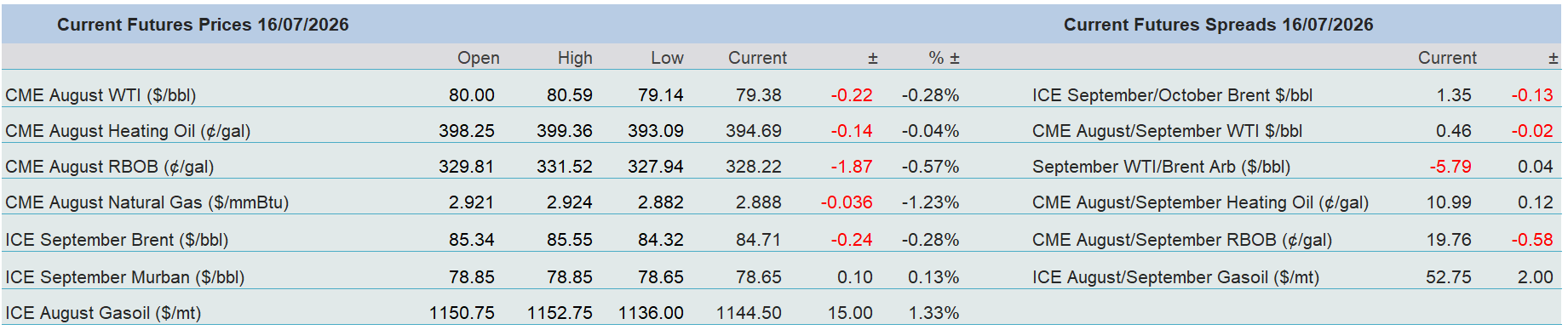
Another dawn and another bout of war watch. Hostilities seem to be intensifying as there have been five-straight days of weapons exchange and nothing to suggest by the reported leaders of our duelling couple that hostilities are likely to end very soon. The US President has once again briefed on how Iran wants to “settle so badly, but if not, we will finish it off.” From the Iranian side, and as seen in the New York Times, a top Iranian official said, “we must fear neither war nor negotiations.” Our market then must walk another tightrope of whether any of these words mean a thing or should it just count the number of ships making the Hormuz crossing. With even that being contested no clear signals bring on a temporary stasis in oil price movement as a pathos of unknowing spreads. The information from independent ship trackers will be eagerly sought as the week draws to an end as to how little oil is getting through. Kpler, as seen on Reuters, reports 7 ships having passed Hormuz via the Iranian side yesterday, down from 13 from the previous day. Yesterday, the head of the IEA, Fatih Birol, warned on an impending global crisis if shipping continued to be constrained. Meanwhile, should the US bombing campaign refrain from hitting Iranian oil infrastructure directly, it is starting to feel as if the conflict will become the everyday and somewhat ignored until it cannot be.

A China cup of intrigue
Whatever artificial intelligence success being enjoyed by the corporations associated with the United Sates and its stock markets, it has found emulation in China. China’s manufacturing accounts for some 30 percent of global activity and while there remains a view that the economy’s reliance on manufacturing investment and exports is politically and economically unsustainable, the incredible amount of monies being heaved into A.I. across the globe continues to create demand for the components required to sustain the buildouts in the varied infrastructure needed for the modern technological phenomenon. Being the experts in providing cheap solutions to manufacturing needs, this is the reason for this week’s quite astounding trade figures.
For the month of June, exports surged by 27 percent and imports increased by 36 percent, resulting in their fastest growth rates since 2021. In the preceding 6 months, the fastest growth sectors in exports were shipping, car manufacturing, semiconductors and of course, the politically dynamite production of rare-earth materials. Given China’s dominance in EVs the rise in fortunes in the automotive industry are hardly surprising and again linked to modern technology. Arguably there is another bout of front loading due to higher levels of tariff from the United States which took effect last month and the possibility of Europe putting in a mechanism aimed at rebalancing trade.
Yet for all the trade success, including the now presumption of another $1 trillion surplus with the United States this year, the issues that bedog internal growth in China persist. There was a marked rundown in GDP for the second quarter at 4.3 percent against an expectation of 4.5 percent. This is the slowest GDP rating since the end of 2022 when China suffered under the disastrous zero-Covid policy. It is also quite the fall from this year’s first quarter reading of 5 percent. Deflationary pressures persist as consumer spending is sluggish with a population becoming ever-increasingly risk averse. This behaviour has not improved for some years now and is largely due to the house price slump and how household wealth is tied up in real estate.
The property crisis, such an old chestnut when considering China, will not go away and has dogged any number of economic initiatives or instances of growth with a negative tenacity that is hard to shake. Blame property developers all it wants for overcapacity, but Beijing is more than culpable due to the insistence on keeping interest rates very low, subsidy provision, and partnering with local governments in property development was and is all part of a centralised plan and at one time worked, being accountable for nearly a quarter of the economy in 2021 according to the IMF. But not so much now. China has experienced a housing bubble burst that comes along regularly in Western economies, but the property problem within its borders is harder to solve. Very few countries have found it easy to maintain growth when the real estate sector runs into trouble, often leading to a financial crisis. Exposure to mortgages is increased as some of the lending banks are state-owned therefore diverting funds away from property into other sectors would be a huge risk and likely counterproductive.
It ought to be safe to assume then that the reason for China’s dramatic cut in 2026 Crude imports is due to the snail’s pace at which domestic demand and growth are running. In June, China imported 7.12mbpd, the lowest since October 2016, customs and Reuters data showed on Tuesday. However, it is hard to qualify that a poor internal economy is completely responsible for a lack of demand for oil feedstock. The domestic problems facing China now, were around in 2025, but it still had imported barrels averaging 11mbpd. Therefore, it is reasonable to pose the argument that appetite is price, rather than demand related. The average price for Brent futures in 2025 was $69.14/barrel and might have been very much lower if it were not for the persistent buying from China. Having seen M1 Brent retreat from spectacularly expensive levels such as April’s high of $126.41 to this month’s low of $70.14/barrel as flows through Hormuz saw an increase, there is evidence of greater oil activity from Asia’s most prolific trader.
The news that China has lifted its export ban on refined fuels with fresh licences being granted to independent refiners should hail another spate of crude market entry from China buyers. It is too early to tell, but the very low 60 percent run rates seen recently are set to improve and with it international feedstock buying. There had been reports of increased interest in ESPO; the Russian low sulphur grade is often favoured, but the troubles Russia faces with internal refining strife due to Ukrainian drone attacks and the competitive nature at which barrels are being offered from the Arabian Gulf sees a switch in appetite. Having likely tapped into its vast SPR during heightened prices, China will also now make good on restocking reserves being as prices have become much more advantageous. Whatever the good, bad and ugly nature of China’s whole economy might be, the greatest driver of oil demand is price and if the Asian Dragon is back in the market, for at least this monthly cycle anyway, prices have found another reason to remain firm.
Overnight Pricing
16 Jul 2026
