Relief, not Belief
The 14-point memorandum of understanding has been made known in detail to the general public, and while any cessation of war is a good thing, this agreement of sorts seems fraught with possible trip-ups. It is described by Washington as "performance-based", with Iran benefitting only if it complies with its commitments. From an Iranian perspective, the sovereignty of Lebanon remains a deal-buster and if Israel continues in its campaign against Hezbollah, Tehran reserves the right to upend the agreement as it regards ‘Point 1; an end to conflict on all fronts’ being applied to this appendage of the war. Tel Aviv is awfully quiet. In ‘Point 5; Strait of Hormuz’, Iran will by “using its best efforts” allow for safe passage across the narrowing. Yet after 60 days, Iran will then “conduct dialogue” with Oman “to define the future administration and maritime services”, whether this predicts a future of maritime tolls is rather unclear, but nonetheless feasible. ‘Points 8, 9 and 10’ revolve around the nuclear question. While Iran has agreed to not actively seek a nuclear weapon, it will be allowed to keep its current stockpile of enriched uranium until as such time in the future an accord can be thrashed out in how to manage the material and if it will then come under the supervision of the International Atomic Energy Agency. There has been the usual cannonade of Trump greatest hits including bombing Iran it if does not comply with the MoU, how this deal is better than anything Obama achieved and that it is a “historic opportunity to prevent Iran from acquiring any nuclear weapons.” It is an incredulous state of language, delivered to an incredulous global population, which under relief from this war being brought back into some sort of predictability, would ordinarily be much more vociferous in challenging this utter rubbish.

The US oil space might just be the only beneficiary in this winless war
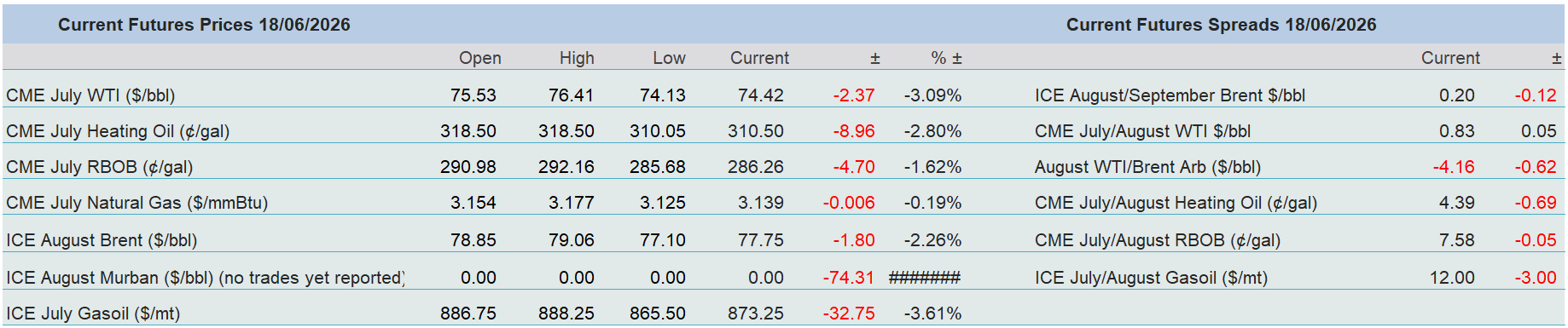
This morning, the price of M1 Brent futures is within $5/barrel of erasing the whole value of the rally from close of business in February to the peak seen on the last trading day of April this year. It is an extraordinary turn of events and one that has caught many, including us, with egg-on-face $150 crude oil muses, stammering for reasons in hindsight. The biggest is obviously the play out of the TACO (Trump always chickens out) turn of events. This, along with the concessionary attitude to Russian sanctions, and indeed Iranian ones, and the incredibly good judgement once again shown by China in never wanting to participate in bringing its considerable buying weight to any scenario which might encourage 3-digit crude prices, has held back prolonged reaches into historically high numbers. The other underestimated factor, and again in hindsight, has been the US oil sector.
The last thirty or so years, as oil markets and their trading have developed, the role of Saudi Arabia has been pivotal in policing oil prices. This is particularly true bearing in mind that the oil price has invariably been driven by supply-side economics. Countless years then have seen Saudi described as the ‘swing producer’; relied upon to turn the spigots either way according to a world that was either in a state of oversupply or the opposite. If it were not for the discipline of the Kingdom, OPEC and the DoC (Declaration of Cooperation) would have collapsed years ago in a sea of cheating and parochialism. Let us also not forget that Saudi has shown fits of pique toward other members of the oil cartel and meting out a lesson by letting slip the oil baffles as it did in March 2020. Boasting, according to the EIA, an enviable spare capacity of 2.1mbpd of production, in ordinary circumstances global shocks to oil prices might expect to be calmed by this ability; but not this latest one. Saudi Arabia, along with its Persian Gulf neighbours has been made ineffectual. As quota busting as Iraq wants to be or as out of OPEC the UAE will become, all have been pinched into powerlessness by the Strait of Hormuz.
The mantle of ‘swing producer’ has now been ripped from the nomenclature of Saudi Arabia and has chosen to land on the recent upstart in oil supply, the United States. Within 10 years, US crude oil production has increased from 8.5mbpd to the current 13.7mbpd. It is a remarkable turnaround story in which Uncle Sam has transformed itself from being a heavily dependent importer into the globe’s largest exporter. Topping the league of exporters may only be a temporary affair as Hormuz sorts itself out for Saudi, or an end to war in Ukraine with the sanctions imposed on Russia allows for its crude to once again travel freely. But given enough shipping availability, this newfound taste of foreign customers is a real bonus for the shale and fracking American experts and one that might not be immediately abandoned. As much as interfering bureaucracy or change of heart administrations might be, the US oil sector is as market-driven as capitalism is allowed. Its production is not bound to state edicts; it is bound to price. Increased drilling will occur when prices rise and slowdown when they deflate. Yes, the macro view in which the United States meddles in sanctions, tariffs and other oil-price moving policies cannot be ignored, but at the micro level, the privately and publicly owned producers still have to adapt to geopolitical influences, even if they are homegrown.
According to Vortexa, and seen on Reuters, US exports of crude and fuel climbed to about 10.5mbpd in May on the back of high output and the release of strategic reserves, Russian exports stood at 7mbpd and Saudi Arabian at 5.9mbpd. It is incredibly worthy to talk upon the power of US SPR and indeed, in the months to come following a tangible Iran war ending, its refill will provide a powerful bid, or speculation of it. But that should now be discussed within the context of how important the US oil industry just made itself in the puzzle that is the global oil picture.
Overnight Pricing
18 Jun 2026
