Sentiment Setback
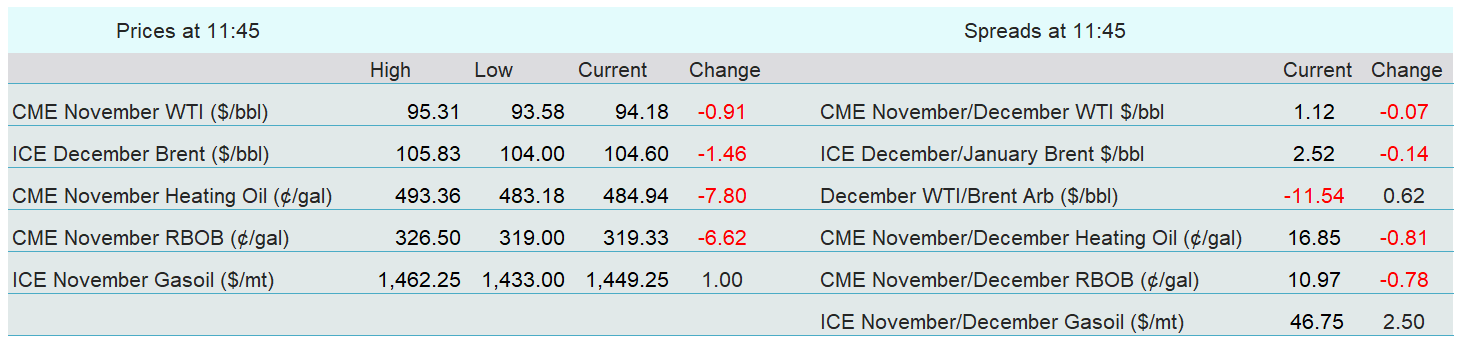
Despite the quite extraordinary draw in crude inventories as published by the American Petroleum Institute of 11.1mb, oil prices are adhering to the sentiment in the wider suite and take a correction. The hotter-than-expected US CPI has once again sent jitters through an investment fraternity which fears another bout of ‘higher for longer’ interest rates. This of course would jeopardise the enormous amount of borrowing seen in the A.I. buildout as financing would become ever-increasingly expensive. Any rise in the cost to borrow will influence all economies and drag on oil consumption.
Our market is paying a little lip service here, with a calming of rhetoric and the normal cat-and-mouse games of Hormuz becoming the everyday, there is a reluctance to take oil price higher. However, any sort of fulfilment of US threats to once again take up arms against Iran will negate macroeconomic considerations and the rally will quickly resume. What also weighs on oil levels this morning is unconfirmed reports on how the US Administration is considering lifting sanctions on some of the ‘dark fleet’ vessels in order to both bring shipping rates down and allow more flexibility in diesel deliveries. Sources of the ‘New York Post’ say “Russian diesel is expected to reach the American market before the Nov. 3 midterm election.” It just gets worse and worse for Ukraine.

Habit changing
The battle to contain the raging prices of refined petroleum products such as diesel and gasoline shows little sign of abating. Throwing out edicts from the White House that there is an ‘energy ceasefire’ between Ukraine and Russia is one in a long list of being ‘Truth Social’ rather than ‘truth fact’. We here have been discussing when the world would start to develop immunity from the Washington wish list, a vein of thought taken up in an excellent opinion by Ron Bousso on ‘Reuters’ and begin refusing to redirect movement lower on the price-managing words of this most market-aware of US Presidents.
Prices in product futures are now becoming as stubborn as those seen on forecourts and it is intriguing that at the end of the gasoline season and with a specification change in quality, something that normally initially supresses prices, has made barely a scratch, let alone a dent. RBOB futures prices remain in the ballpark of July and August levels and when looking at ‘GasBuddy’, the 18-Month Average Retail Price Chart shows current prices just shy of $4.40/gallon only $0.15 or so lower than the highs seen in June. From a technical analysis basis, we were intrigued as to what might happen when the ICE M1 Gasoil futures contract expired this week. With such a high backwardation there was an expectation for a setback. There was one, but it lasted only hours and if there was any doubt that the performance of October26 futures was solely down to the machinations of expiry, they were quickly expunged inside of 24-hours and the rally by November26 futures has resumed and day before prices matched. Using data from the ‘RAC’ and ‘toll.eu’, European diesel users are paying up €2.40/litre in Germany and in the UK the workhorse fuel is achieving £2.00/litre where retailers can get away with it.
It should come as no surprise then on how the EU and China have been trying to come to equitable terms when dealing with the soaring amount of hybrid vehicles being snapped up by European drivers. China will now accept an agreed quota of 350k vehicles in 2027. The value of China’s exports of hybrids to the EU tripled to €6.7 billion in the first half of this year, from €2.2 billion a year earlier, according to Chinese customs data. Imports have been soaring in the past two years; about 800,000 battery and plug-in hybrids are likely to be sold this year, according to the ‘Guardian’. The financial incentives to look at alternatives to internal combustion engines (ICE) are becoming more apparent and according to the IEA, crude oil prices that average $100/barrel mean EV drives are enjoying 35 percent more savings. That saving is lower with hybrid vehicles, but there remains range anxiety and lack of infrastructure in EV consideration, therefore, hybrids are the preferred transition. According to the ‘European Automobile Manufacturers’ Association’, through the first eight months of 2026, hybrids of all types accounted for 47 percent of all new car registrations in the European Union. In the United States, and according to ‘Reuters’, hybrid electric vehicle sales reached a record 19 to 24 percent of new light-duty vehicle sales during recent 2026 quarters. Sales of EVs have fallen significantly after expiration of a $7.5k tax incentive as hybrids are more favoured due to a lower initial outlay, and the habits drivers exhibit in everyday fuelling.
The rise of hybrid cars may give a softer landing than oil haters might want but combined with EVs the dent to oil consumption is and will be significant. Global EV and plug-in hybrid sales grew 20 percent in 2025 to 20.7 million units, with Europe up 33 percent to 4.3 million and China up 17 percent to 12.9 million, and ‘BloombergNEF’ expects the daily oil savings from electrified transport to more than double to 5.3 million barrels by 2030 as that passenger car share keeps growing. Hybrids are a stepping stone and suit the pockets and driving habits of global road users and offer more control in how vehicles contribute to monthly household budgets. Along with EVs they offer greater predictability, something sadly lacking in oil prices and those politicians that drive the current theatres of war responsible for inflating the price of almost everything on the planet. ‘Peak oil’ has been called too many times, but if a resolution to the concurrent world-changing wars going on at present fails to show up, howsoever transition from ICE cars, buses, trucks et al, develops itself, a US President in the near to medium future may not be shouting ‘drill, baby drill’, but ‘generate, baby generate’.
Overnight Pricing
15 Oct 2026
