Triple Digits is Once Again a Reality
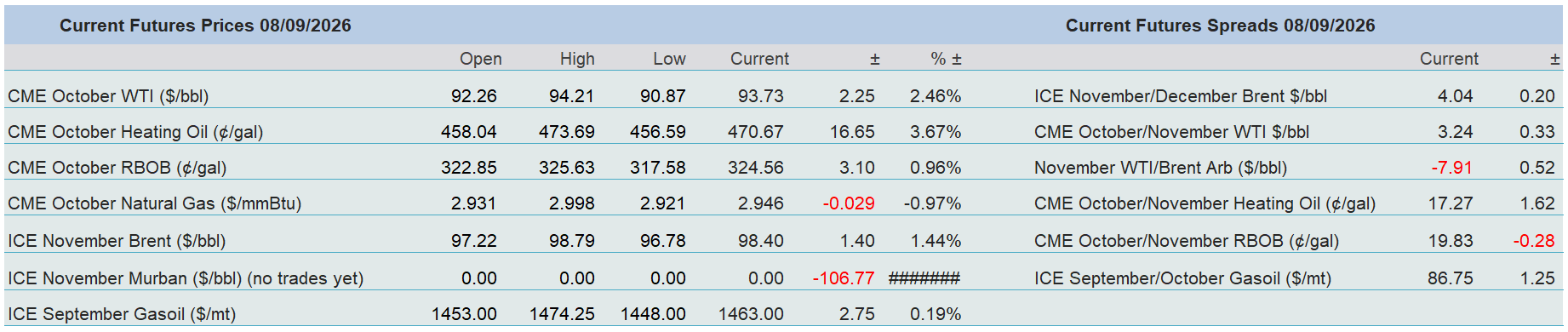
Oil prices are once again coming to the simmer, heated by another turn to violence across the Middle East. After the ‘Financial Times’ yesterday reported an attack on the Aramco facility in Jazan, this morning, fresh reports are seen across the wires of further Houthi attacks into Saudi Arabia in the cities of Abha, Khamis Mushait, Jazan and Najran, killing many civilians and, according to ‘Reuters’, oil infrastructure has been disrupted. After the sobering development over the weekend where oil tankers have become fair game, it comes as little surprise that any official tracking of vessels that have crossed the pinch of Hormuz amounts to little more than a trickle. The catalyst to this bout of near 3-year violence was the Hamas attacks into Israel in October 2023, and the news coming from the West Bank and Gaza itself does not point to anything like a peace process. With Iran bragging on an increased ballistic ability to attack US naval vessels, there are now any manner of flashpoints playing interference hurdles to whatever path of peace might be deemed acceptable to the growing belligerence of all. Not even the news that China’s crude imports remain muted is able to douse this reach for $100/barrel Brent. According to ‘Reuters’, and at under 9mbpd, China’s crude imports hardly changed in August from the July amount and still remains 23.4 percent lower when measured from a year earlier.
It really is getting rather serious
It matters not for those that are practitioners in financial market of how many rings one might have in their tree of life; the current times are surely the most fraught ever witnessed. It would be easy to tangent off into a diatribe of negativity and have this note wander around with a sandwich board proclaiming “the end is nigh” in dark doom, but its not about to. It is about contemplating the immeasurable outcomes, far too long to list, of that which give reason for markets in any medium, to currently behave as they are. Oddly, there is nothing new in what is going on, after all, it is just an echo of the industrial revolution’s economic catalyst which brought about mass transportation and production along with greater communication and migration. Again, in partial repetition, our current form of globalisation is being undone by increasing divides in wealth and health, the threat of modern technology to contemporary employment and a shifting political arena to what many view as ‘far-right’, as seen in the localised success by the AfD (Alternative for Germany) party at the weekend. With record breaking heat in the Northern Hemisphere’s summer this year and the super El Niño claxon gathering more and more words of warning, climate change stalks the conscious of strategic planning as much as the military type.
Under the guise of national security, scantily clad ambitions of geographical expansion are being practised by those few countries able to put them into practice. The United States’ hostile takeover of Venezuela’s oil assets and continued undermining of Canada and Greenland’s sovereignty, among others, indicates it will tolerate no strategic linking of any country in the Americas without Uncle Sam’s approval. Russia is still wielding a bludgeon in the Ukraine and harries both military defences and cyber police of so many nations within its geographical sphere form the Baltic states to many countries of the European Union and the United Kingdom. China’s play is a little more subtle. Combining trading acumen and monetary alliances across all continents, its business footprint and leading technological manufacture, made possible by dominance in rare earth materials, has ever-increasing projection of influence. And this of course does not take into account the very real threat posed to the existence of Taiwan’s independence. Nimbyism (not in my back yard) is not just a local government thing where residents try to thwart any type of planning, it has taken on national bearing and with it a prickly form of diplomacy that might in turn lead to more conflict.
Why this, very short and very exhaustible, philosophical bent? Well, everything is leading to an economic nexus. What that might look like is as debatable as some of the current affairs listed above being relevant. However, with a European Central Bank interest rate decision this week and the US Federal Reserve and Bank of Japan next week, how the guardians of the globe’s financial systems plot the way forward becomes even more important. If we accept the rounding arguments above, they are all inflationary. Stiffer borders and policies to defend them, along with parochial trading practices must drive up prices. With current wars around supply lines and every part of the globe’s ability to move ‘stuff’ coming under pressure, it is not only the commodity being shipped but the very mode in which it is shifted now feeling pinch-point price rises.
The current bout of Non-Farm payrolls belie the intense pressure employment will feel as A.I. starts to take bites within the world’s workforces. Paying for people not to work will increase national debts and the cost to service the US $40 trillion debt for example should bring tears to the eyes of followers of Keynes’s theory that aggregate demand, measured as the sum of spending by households, businesses, and most crucially, the government, will carry on instilling growth. Not if there are fewer in gainful employ. Debt issuance is now a competitive marketplace. Questions will continue to be asked by bond buyers as to whether they would like to own the debt of the US Government or one of the gigantic so-called hyperscalers issuing debt across the currencies of the world. The United States Credit Rating on Fitch and S&P is AA+ and with the federal government running an annual deficit of around $2 trillion (about 6% of GDP), one wonders how long before the current rating is not once again assessed. Incidentally Microsoft is AAA.
The US 30-Year Bond Yield is already way above 5 percent, with the much more sensitive 10-Year Yield also hunting down such a redlight reading having inflated from 4 percent at the beginning of March. Every report from Hormuz of failed traverses of tankers belonging to any country of origin being hit by missiles, sends ripples of inflation fear across all the seas of the atlas. Whatever anguish is being felt in this current bout of deglobalisation, of threats both foreign and domestic and what the footprint of the world order will end up looking like is exaggerated and exacerbated again and again by our newfound forever war and what oil tonnage or barrels is able to make way through 26.45° North by 56.20° East. As seen on 'Al Jazeera', and pulling no punches, Qatar’s Foreign Ministry spokesperson, Majed Al-Ansari, has told US media that opening the Strait of Hormuz is a priority, as the world faces an “industrial catastrophe” if the crisis continues. Hormuz needs to be opened quickly not only to alleviate delinquent oil reserves, but to soothe possible runaway price rises and the socioeconomic consequences including demand destruction everywhere.
Overnight Pricing
08 Sep 2026
