That Was the Month that Was....
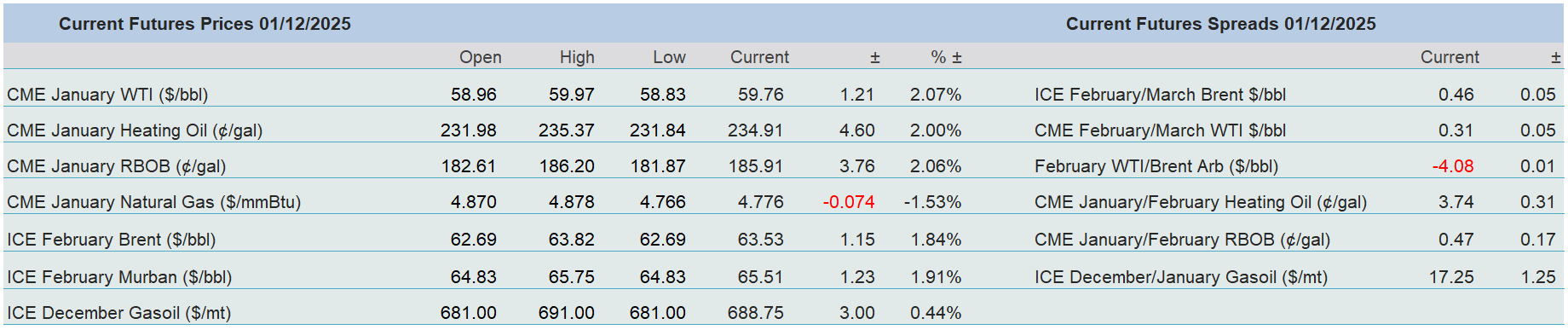
In the month-1 five main futures contracts of the oil complex last week, progress registered thus. WTI +$0.49/barrel (+0.84%), Brent +$0.64/barrel (+1.02%), Heating Oil -12.34c/gallon (-5.02%), RBOB +1.25c/gallon (+0.66%) and Gasoil -$26.00/tonne (-3.65%). Poignancy of a lacklustre performance is better outlined in monthly gains or losses. The difference between COB in October and November shows WTI -3.98%, Brent -2.87%, Heating Oil -4.04%, RBOB -4.88% and Gasoil -4.56% respectively, with a worrying sign from the crude contracts falling consecutively for the last four months. This is the longest run of losses since WTI fell five times during the Nov22 to Mar23 period and Brent’s five-straight declines over Jan23 to May23. Our market has expressed high hopes for distillate contracts, the one thing that might give a seasonal reason to keep bears away, but with a creep higher of diesel and heating oil stocks and increase in refinery utilisation, and of course any mending of Russia’s ability to return its important flow of their like if a peace deal finally finds fruition in Ukraine, the middle part of the barrel prices have recently gone the way of crude and the overriding narrative of oversupply gains voices.
As expected, it looks as if the representatives of OPEC+ have stability in mind rather than continuing their pursuit in clawing back market share. Argue all one might on the diminishing influence of OPEC+, any institution producing half of the globe’s production in any commodity, let alone the most important one, needs be mindful of the current optics, particularly those that magnify the many images of 'glut'. Having brought back 2.9 million barrels of daily production into the market since April of this year, the cartel, probably wisely have opted to give the market a little time to breathe to shutter any further increase of marketing their barrels for the duration of next year’s first quarter. There is still a weighty 3mbpd of cuts that can be brought back when conditions are deemed more absorbent, and of course the market fanbase is more than cognisant of such future potential and is rightly wary. For the moment, members will have to satisfy their negotiating skills as they look at production capacity versus quota. This is nothing new, but those such as the UAE who have plied multi-million-dollar stages of investment into increasing their production potential and pursue an ideal for some of the groups constituents to achieve some sort of weighting assessment. The upshot being that while OPEC is housing production for fear of adding price pressure, another bout of cartel oil will be winging its ways to a meeting near you sometime later in the year, but with the immediate relief to the weekend’s decision being seen in the price rally overnight.
Yet, for oil purposes the month of November finished as it started being dominated by Ukraine, not only if sanctions would begin to tell or if, what and when a peace deal might be seen. While the intricacies and on/off likelihood of Russian sanctions drone on, and other forms of drones hit Russian oil interests with increasing accuracy, the US sprang a surprise by initiating a peace plan. For all intent the 28-point agenda seemed an almost wish list of the Kremlin’s making and there have been many calls of ‘foul’, of US facilitation of a Russian authored directive including from powerful voices in the US Senate. Ukraine and its currently pressured President, Volodymyr Zelenskyy, are in the metaphorical rock and hard place, threatened on one side by a belligerent aggressor, made brave by lack of consequence to its actions, and the most powerful country in the world whose President is more interested in how ending the war plays out in his legacy and what business can come the US way in exchange before guaranteeing Europe’s most Easterly buffer. A Ukraine delegation is currently in Florida negotiating with Messrs Rubio, Witkoff and Kushner to thrash out a framework with negotiations being described as “not easy” by Kyiv’s representatives. Imagine the delight in Moscow. Obfuscation and delay are the primary winning formulae for Russia as it grinds its opponent’s military forces down. If the talks in the Sunshine State are not easy, then the chance of Vladimir Putin agreeing to anything other than nigh capitulation are zero and because the US has placed itself in a position of being something of a Russian stooge, despite noble pursuits, the Kremlin can now easily blame Kyiv for lack of reasonableness and this farrago will continue into when we are all singing ‘Auld Lang Syne’.

Skirmishing on the edges of the oil conscious in November has been the rallying US Dollar. It is a mild suppressant to our market and really is the only link we currently have with the plight of equities other than morning openings when ‘risk off’ and ‘risk on’ tend to migrate across investment suites. The global currency has not found fresh invigoration from international interest, indeed, given a choice many blocs including that of BRICS are happy to divest into elsewhere. The greenback has improved its path because of a dose of pragmatism in the stock markets which was fuelled in the middle of last month by a belief that the Federal Reserve appeared to be on a course of inaction for a December interest rate cut. Frankly, the back end of last week belies last month’s stutter in US stock market exceptionalism. The S&P 500 eventually scraped a 0.1 percent monthly rise, the Dow Jones a 0.3 percent improvement, but interestingly the tech heavy Nasdaq eased by 1.5 percent, being the first decline since March. The stock market losses might have been so very much more significant if it were not the knightly Nvidia darling riding rescue to all two weeks ago. Armed with another stellar quarterly performance and bullish outlook it swept away the concern being seen in the size of investments into A.I., bond issues from its contemporary tech giants and the warnings of high valuations. It really is patently true that there is the Mag7 index and the S&P 493 and as lopsided as it seems it is not a new phenomenon and the super bulls of the US markets are once again strutting their stuff after what they are deeming, and somewhat conveniently, ‘a necessary correction’.
The optimism is also founded in interest rate hope. We mused earlier last month on how the CME FedWatch tool might itself be a tradeable asset bearing in mind the volatility seen in its probability readings. On the last trading day of October, a cut of 25-basis points stood at 63 percent, two-weeks ago it pushed on to 90 percent, fell away one week ago to 45% and finished Friday with a probability of 87 percent. Every single instance of jawboning from a FED member, every belated posting of data emerging from the data desert of the US government shutdown, be it inflation or employment saw reaction, which will continue right up until the 10th of December when the FOMC comes to a decision. Again, market attitudes were changed by Nvidia, and whereas warnings of job market problems and lower industrial activity were finding themselves being used as tools for warnings on a stock market bubble, there came a sudden shift where markets once again adopted attitudes of bad news being good while being nudged along by dovish utterances from FED talking heads and the prospect of a Trump-friendly Keven Hasset being the next chair of the US Central Bank. The path to lower interest rates is all but reality for the bourse bulls. If November tells us anything, it is that markets cannot be taken for granted not even in December when we wish for ‘Tidings of Comfort and Joy’ and produce strange compositions on the photocopying machine at the office Christmas party.
Overnight Pricing
01 Dec 2025
